
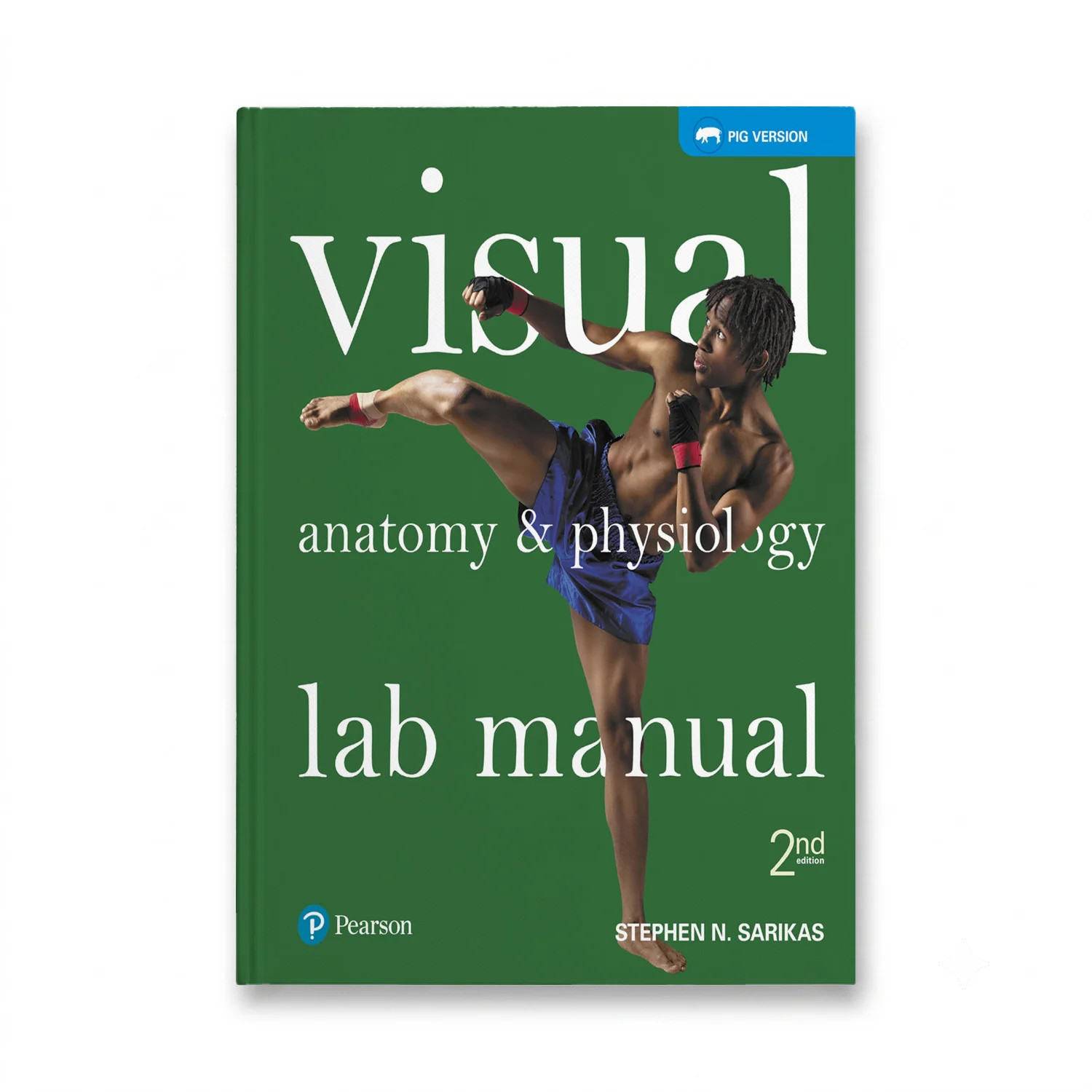

Visual Anatomy & Physiology Lab Manual, Pig Version brings a revolutionary visual approach to the two-semester anatomy and physiology laboratory course. Authored by Stephen Sarikas, this 2nd edition builds upon a modular organization designed to maximize student learning and reinforce essential biological concepts. By integrating high-quality figures directly from the Martini Visual A&P textbook, the manual provides a seamless transition between lecture and lab, emphasizing clear, easy-to-follow visuals and frequent practice opportunities.
The manual is structured around unique two-page lab activity modules that integrate text and visuals, allowing students to complete exercises efficiently without the need for page-flipping. This edition introduces enhanced features such as pre-lab quizzes and comprehensive review sheets to better prepare students for hands-on activities. Specifically tailored for the pig dissection model, the content guides learners through detailed anatomical studies with a focus on making practical connections and mastering complex physiological systems.
Book Details:
- Full Title: Visual Anatomy & Physiology Lab Manual, Pig Version
- Author: Stephen N. Sarikas
- Edition: 2nd Edition
- Publisher: Pearson
- Publication Date: January 4, 2017
- ISBN-10: 0134552199
- ISBN-13: 978-0134552194
- Language: English
Designed for active learning, this lab manual provides powerful tools for students to excel, combining practical exercises with assignable content and virtual study tools to ensure a thorough understanding of the human body through the study of the fetal pig specimen.