
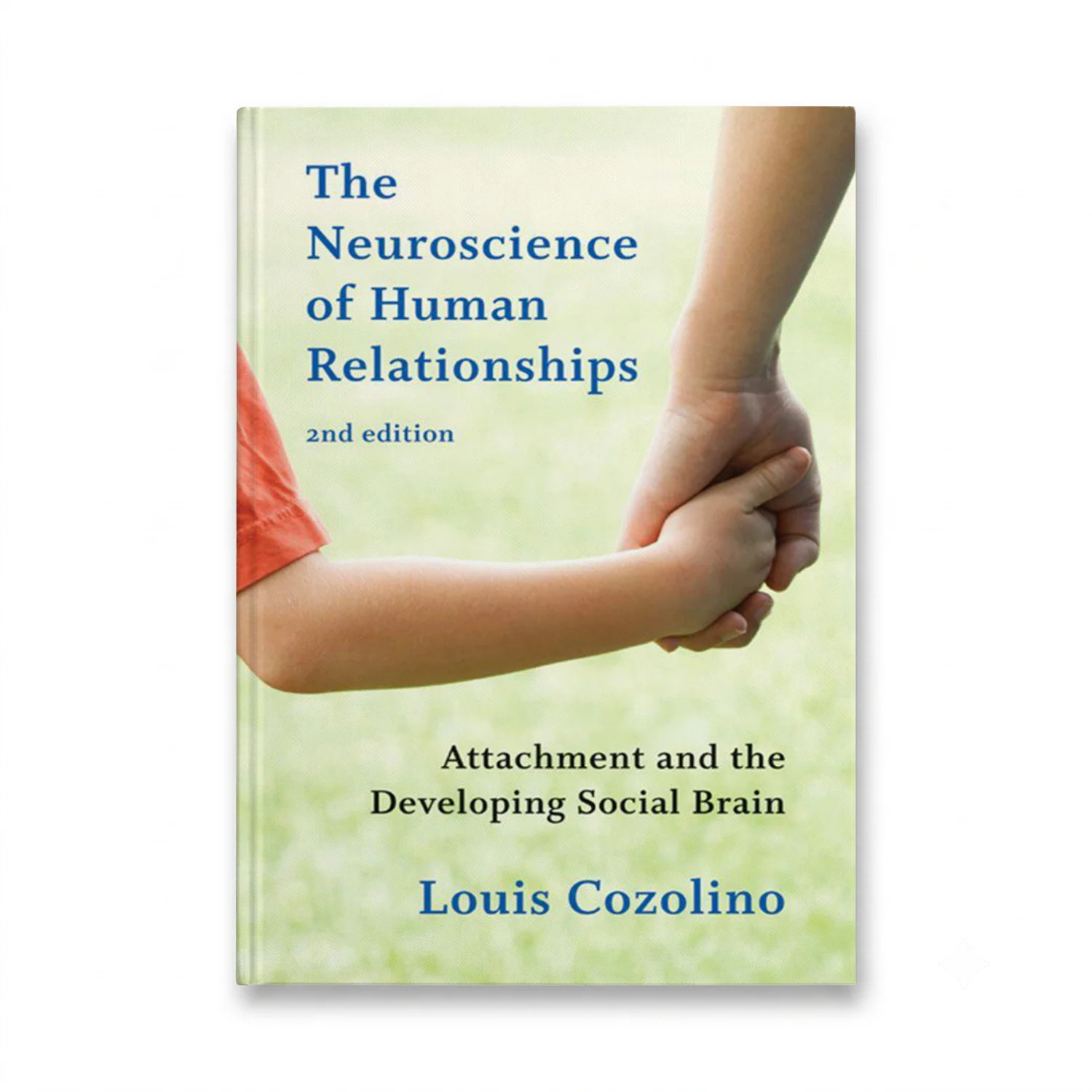

The Neuroscience of Human Relationships: Attachment and the Developing Social Brain (Norton Series on Interpersonal Neurobiology) delves into the intricate world of social neuroscience, revealing the profound impact that relationships have on brain development and function. Written by Louis Cozolino, this second edition explores how our brains are inherently social organs, built through experiences and interactions with others. The book uses compelling case examples from the author’s extensive clinical experience to illustrate key concepts, blending brain drawings and clear explanations of social neuroscience findings with emerging research from various disciplines.
Since its first publication in 2006, the field of social neuroscience has witnessed remarkable growth, driven by technical advancements that offer unprecedented insights into our neural universe. This revised edition reflects these significant developments, discussing the expanding understanding of mirror neurons and their role in human relationships. It also highlights the transition from focusing on individual brain structures to examining functional neural systems, emphasizing the interconnected nature of cognitive processes.
The book covers a range of topics, including attachment, empathy, compassion, and mindfulness, all of which are increasingly recognized in scientific literature. Cozolino delves into questions about how we come to know others and the nature of our “individual self,” challenging traditional notions with new perspectives drawn from cutting-edge research.
With 27 illustrative diagrams, this comprehensive resource provides readers with a deeper understanding of how relationships can reshape the brain throughout life. It is an essential read for anyone interested in the intersection of neuroscience and human relationships, offering valuable insights into the complex dynamics that shape our social interactions and emotional well-being.
Published by W. W. Norton & Company on March 24, 2014, this second edition comprises 656 pages, making it a thorough exploration of how the brain is built through relationships and what that means for individual development and social behavior.