
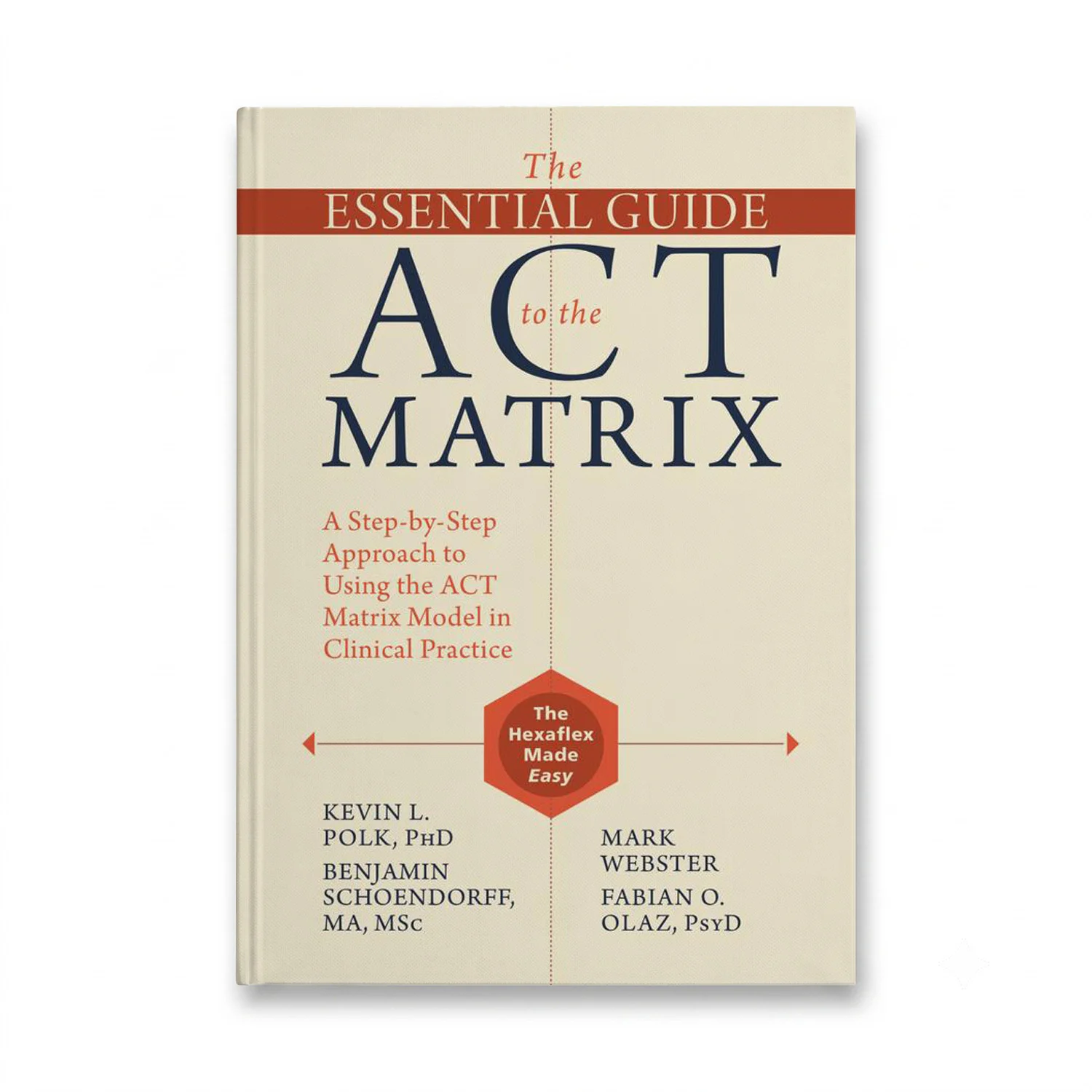

The Essential Guide to the ACT Matrix: A Step-by-Step Approach to Using the ACT Matrix Model in Clinical Practice
By Kevin L. Polk PhD (Author)
Publish Date: June 1, 2016
Language: English
Publisher: Context Press
Dimensions: 7 x 0.75 x 10 inches
ISBN-10: 1626253609
ISBN-13: 978-1626253605
Print Length: 288 pages
Description: The ACT Matrix revolutionized contextual behavioral science. Now, the creators of this pioneering new model present the first detailed, step-by-step guide to help professionals implement the ACT Matrix in clinical practice and improve clients’ psychological flexibility.
If you’re a clinician, you know that acceptance and commitment therapy (ACT) is extremely effective in helping clients who are “stuck” in unhealthy thought patterns by encouraging them align their values with their thoughts and actions. However, the ACT model is complex, and it’s not always easy to use. Enter the ACT Matrix, a seamless fusion of the six core processes of the ACT hexaflex—cognitive defusion, acceptance, contact with the present moment, observing the self, values, and committed action—into a simplified, easy-to-apply approach.
From the editors of The ACT Matrix, The Essential Guide to the ACT Matrix offers professionals a comprehensive guide to using the innovative Matrix model in-session. With this book, you’ll learn how to help your clients break free from painful psychological traps and live more meaningful lives. You’ll also learn how client actions and behavior should be viewed as workable or unworkable, rather than good or bad. Most importantly, you’ll discover how this unique approach can be used to deliver ACT more effectively in a variety of settings and contexts, even when clients are resistant or unmotivated to participate.