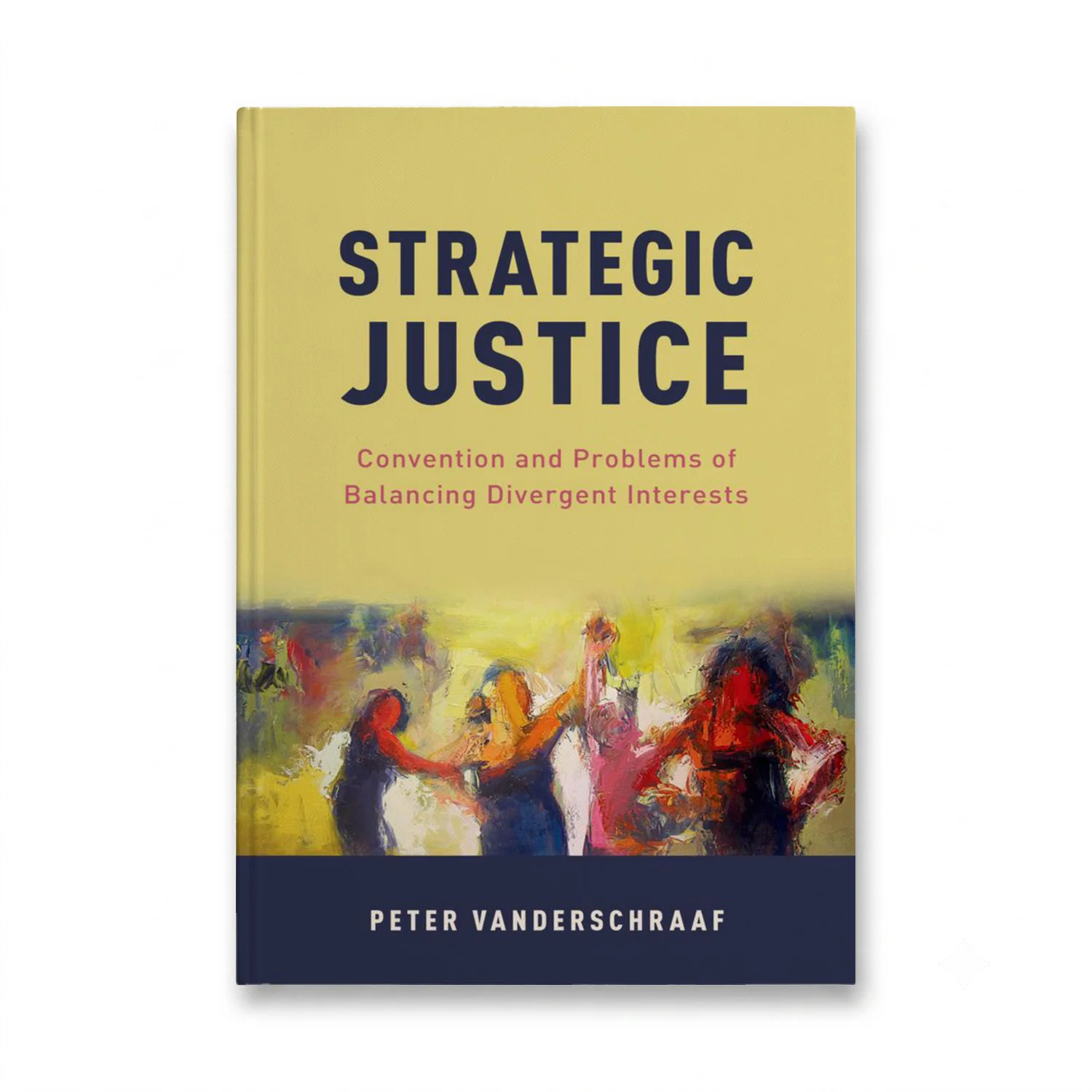
In Strategic Justice: Convention and Problems of Balancing Divergent Interests, Peter Vanderschraaf argues that justice can be properly understood as a body of special social conventions. The book integrates insights from past masters of moral and political philosophy with recent analytical and empirical concepts from the social sciences to provide a new defense of this idea. Through a game-theoretic analysis, Vanderschraaf defines conventions as equilibrium solutions to games that summarize social interactions with stable resolutions, exploring justice as a system of rules for mutual advantage. This work delves into how justice can remain stable in the face of societal changes such as resource depletion, technological innovation, and population fluctuations or declines. The author argues that this new account of justice-as-convention provides a cogent explanation for why justice requires protecting the most vulnerable members of society. Readers will gain insights into the nature of justice and its role in ensuring mutual advantage and stability in an ever-changing world.

✓Get it before class startsSemester is close, get it now and start reading tonight.
✓Right edition guaranteedWrong edition or ISBN? Free swap.
✓Help any day, any hourFile will not open? We fix it or refund you.
✓Buy once, keep itNo subscription, no app, no expiry date.
