
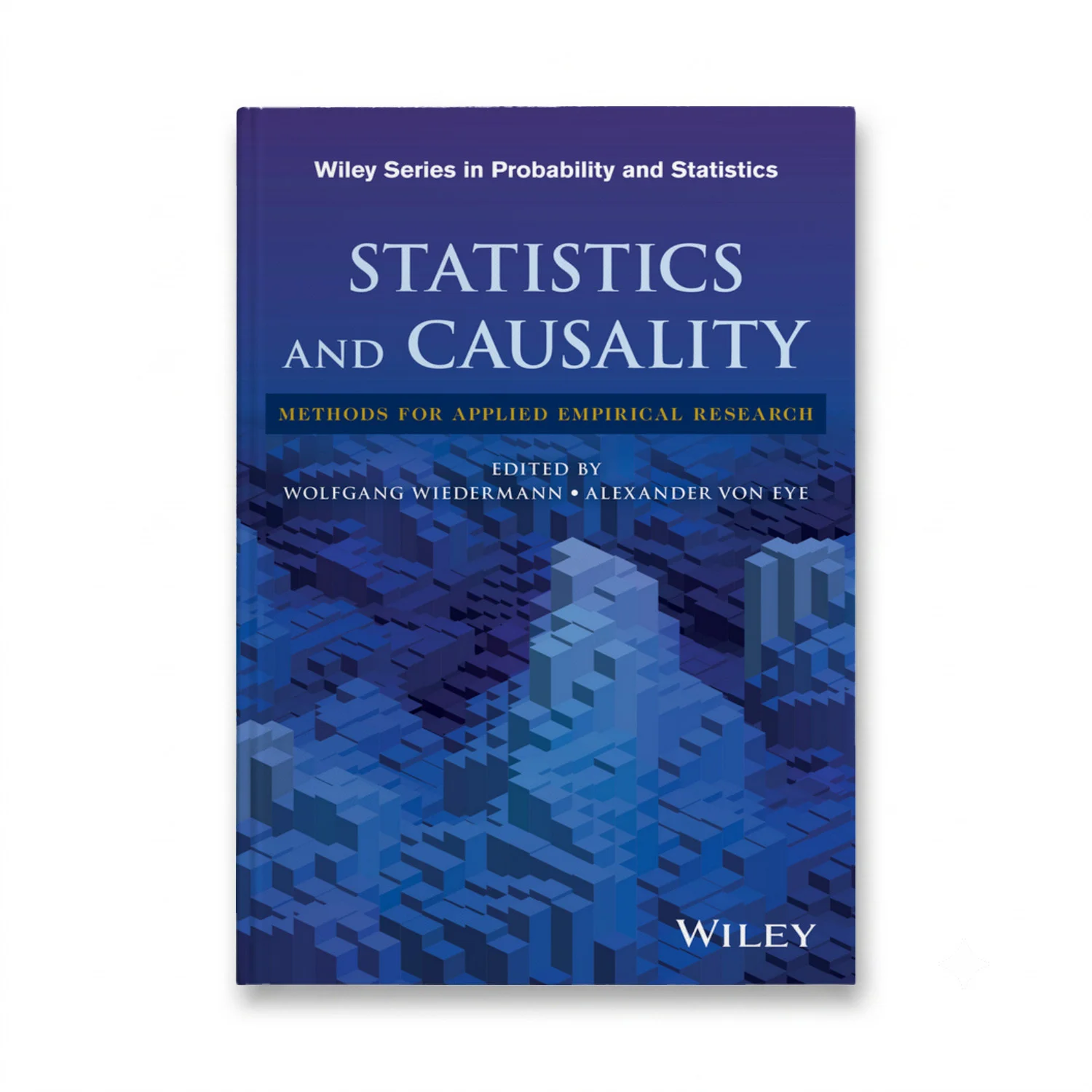

Statistics and Causality: Methods for Applied Empirical Research, edited by Wolfgang Wiedermann, offers a comprehensive guide to understanding and applying modern statistical methods in causality analysis. This volume is part of the Wiley Series in Probability and Statistics, specifically Book 2, and was published on May 12, 2016, under ISBN-13: 978-1118947067.
The book is structured into five distinct sections that explore various aspects of causality in statistical research. The first part lays the groundwork for causal structures and delves into theories such as standard mechanistic and difference-making approaches to causality. This section provides essential foundational knowledge for readers new to the field, making it accessible even to those with varying levels of expertise.
The second part introduces advanced methods designed to determine the direction of effects in a more nuanced way than traditional tests allow. These methodologies offer deeper insights into how variables interact and influence each other, pushing the boundaries of conventional statistical analysis.
In the third part, readers will find detailed discussions on Granger-causality testing and related issues. This section is particularly valuable for researchers working with time-series data or those interested in understanding causal relationships over periods.
The fourth part delves into counterfactual approaches and propensity score analysis. These advanced techniques allow for a more precise assessment of causality by considering potential outcomes under different scenarios, providing robust methods to address confounding factors in empirical research.
The final section offers an overview of common research designs used in epidemiology, focusing on causal inference methodologies specific to this field. This part is especially relevant for practitioners and researchers working in areas such as public health and social sciences.