
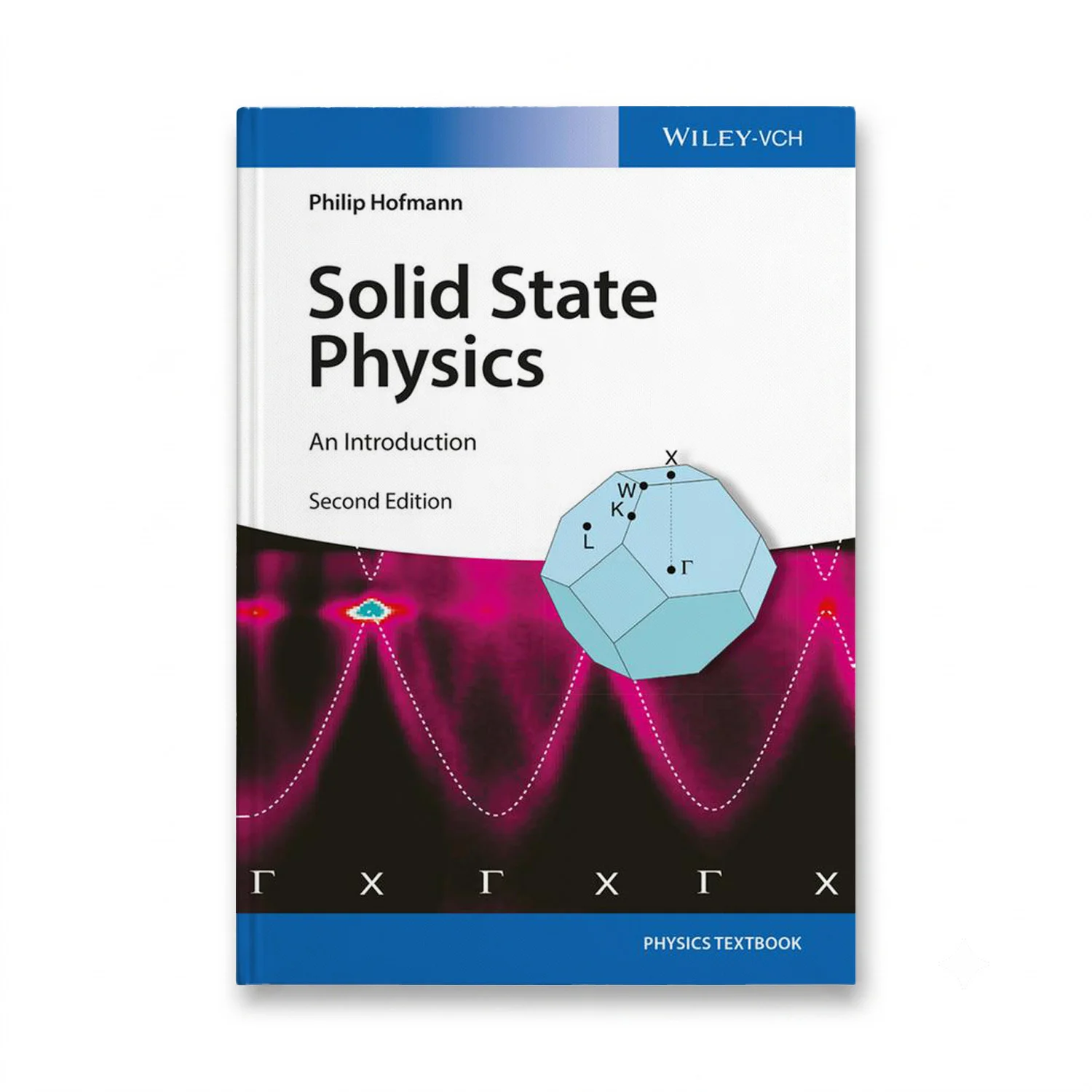

Solid State Physics: An Introduction by Philip Hofmann offers a comprehensive and accessible overview of the field, making it an essential resource for undergraduate students. This second edition, published in April 2015, builds upon its predecessor with careful updates to reflect recent advancements and relevant applications.
The book delves into both fundamental concepts and advanced topics such as magnetism and superconductivity. Each chapter begins with a foundational introduction, gradually progressing to more complex discussions, ensuring that readers gain a thorough understanding of solid state physics principles. The author’s approach emphasizes qualitative explanations, enabling students to grasp key ideas even when encountering challenging mathematical aspects.
Updated to include cutting-edge materials like graphene and topological insulators, the text also covers transparent conductors with high practical significance in communication and energy technologies. A unique feature is its assumption of minimal prior mathematical knowledge, making it suitable for a broad audience. Over 100 discussion questions and about 70 problems, complete with solutions available to lecturers via the Wiley-VCH website, further enhance the learning experience.
The revised edition introduces several new topics such as mechanical properties of solids, crystal structure, band structure of graphene, quantum hall effect, tight-binding model, atomic magnetism, and topological insulators. It also revises discussions on semiconductors and magnetism, providing a more extensive coverage of finite solids and nanostructures.
For educators, the book’s author maintains an online resource with additional materials including x-ray scattering notes, elastic constants, quantum Hall effect insights, atomic magnetism details, and topological insulators. These resources offer valuable supplementary information for both instructors and students.
This second edition is not only a go-to textbook but also a valuable reference for those interested in the latest developments in solid state physics, making it an indispensable tool for any student or researcher in this field.