
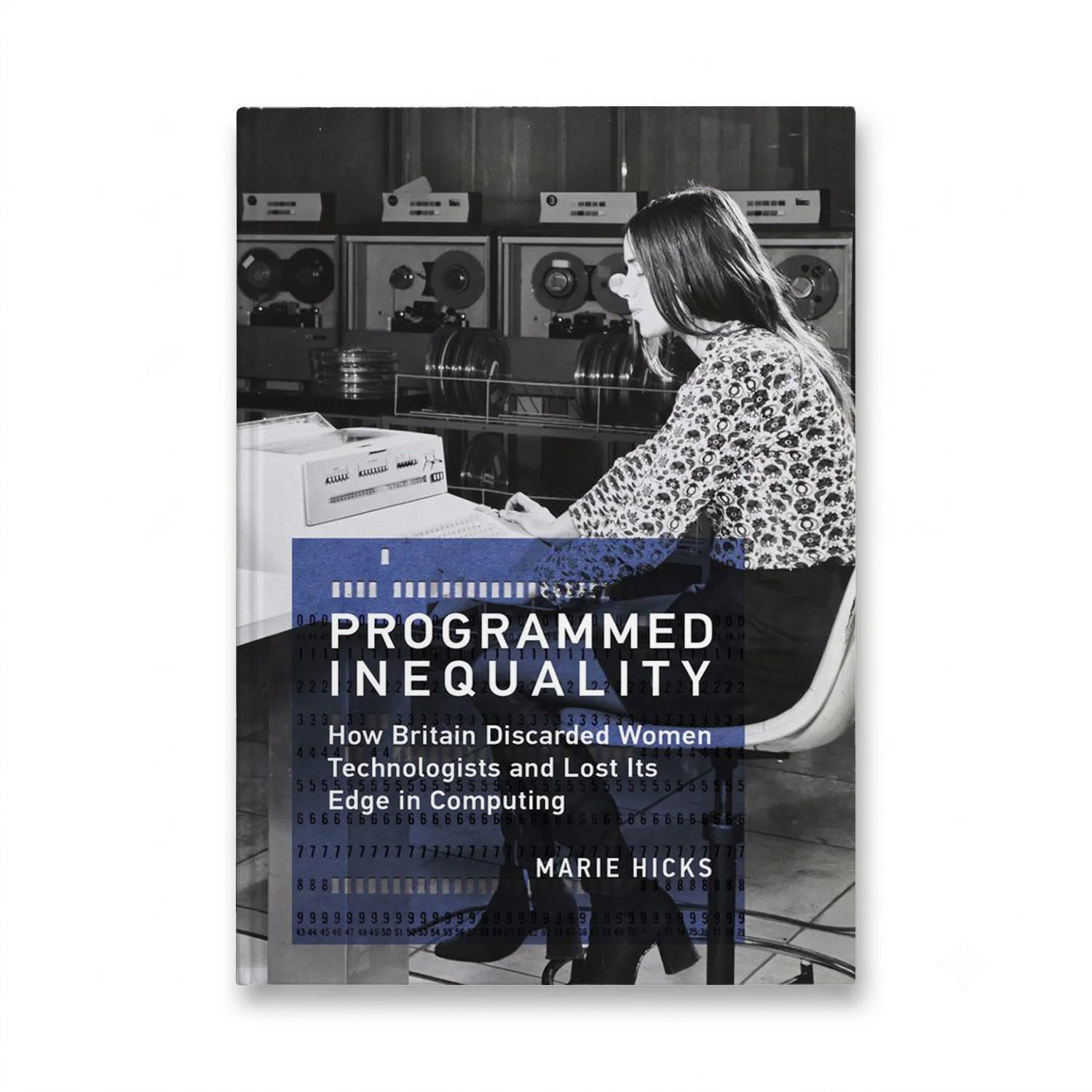

In 1944, Britain led the world in electronic computing. By 1974, the British computer industry was all but extinct. What happened in the intervening thirty years holds lessons for all postindustrial superpowers. As Britain struggled to use technology to retain its global power, the nation’s inability to manage its technical labor force hobbled its transition into the information age.
In Programmed Inequality: How Britain Discarded Women Technologists and Lost Its Edge in Computing, Marie Hicks explores the story of labor feminization and gendered technocracy that undercut British efforts to computerize. That failure sprang from the government’s systematic neglect of its largest trained technical workforce, simply because they were women. Women were a hidden engine of growth in high technology from World War II to the 1960s. As computing experienced a gender flip, becoming male-identified in the 1960s and 1970s, labor problems grew into structural ones and gender discrimination caused the nation’s largest computer user — the civil service and sprawling public sector — to make decisions that were disastrous for the British computer industry and the nation as a whole.
Drawing on recently opened government files, personal interviews, and the archives of major British computer companies, Hicks provides a critical examination of how gender dynamics shaped the technological landscape. This book offers insights into the historical processes that influence modern computing industries and highlights the importance of diverse perspectives in technical fields.