
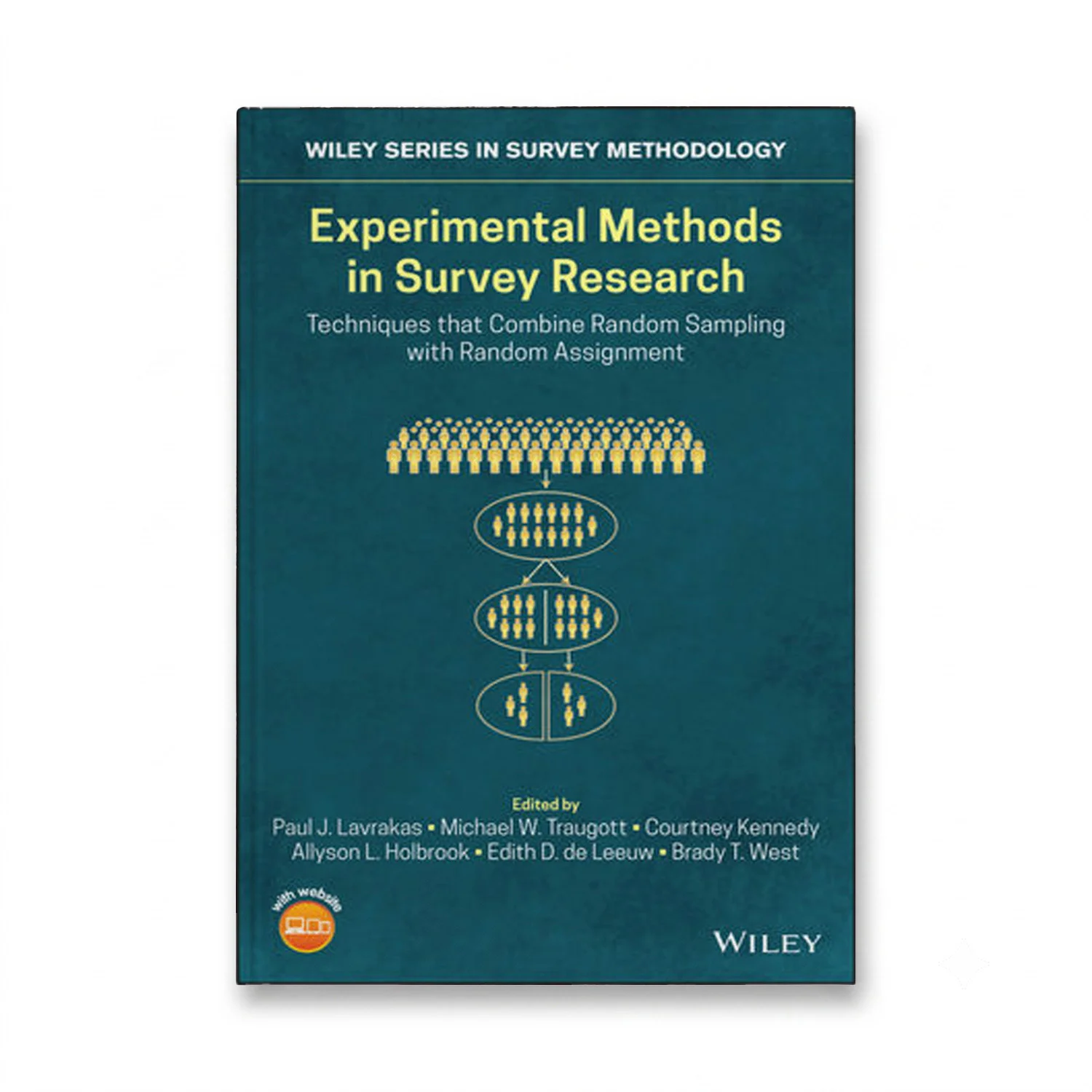

A thorough and comprehensive guide to the theoretical, practical, and methodological approaches used in survey experiments across disciplines such as political science, health sciences, sociology, economics, psychology, and marketing, Experimental Methods in Survey Research: Techniques that Combine Random Sampling with Random Assignment explores and explains the broad range of experimental designs embedded in surveys that use both probability and non-probability samples. It approaches the usage of survey-based experiments with a Total Survey Error (TSE) perspective, providing insight on the strengths and weaknesses of the techniques used.
The book addresses experiments on within-unit coverage, reducing nonresponse, question and questionnaire design, minimizing interview measurement bias, using adaptive design, trend data, vignettes, the analysis of data from survey experiments, and other topics, across social, behavioral, and marketing science domains. Each chapter begins with a description of the experimental method or application and its importance, followed by reference to relevant literature. At least one detailed original experimental case study then follows to illustrate the experimental method’s deployment, implementation, and analysis from a TSE perspective. The chapters conclude with theoretical and practical implications on the usage of the experimental method addressed.
In summary, this book offers readers a deep understanding of the various techniques and their applications in survey research, making it an essential resource for researchers, students, and practitioners in the field.