
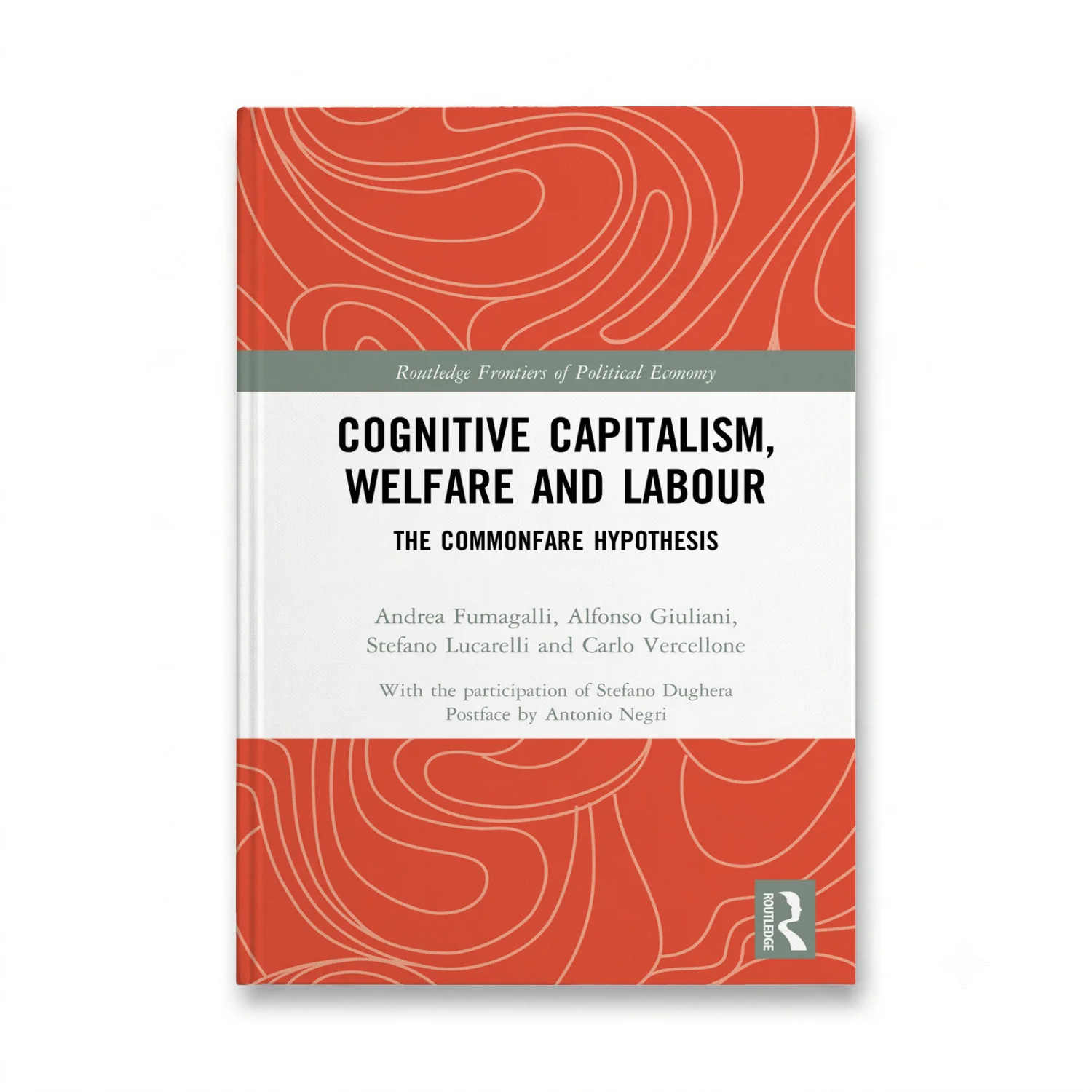

Cognitive Capitalism, Welfare and Labour: The Commonfare Hypothesis (Routledge Frontiers of Political Economy) explores the transformations in both accumulation processes and labour during the transition from Fordist to cognitive capitalism. Focusing on Western economies, it examines how the value of cognitive labour has become dominant in this new phase of capitalist development. The book delves into the ways in which knowledge is transformed into a commodity or fictitious capital, underpinning the control and privatization of collective knowledge.
Building upon these insights, the authors introduce their concept of “commonfare,” which emphasizes the social re-appropriation of gains from the exploitation of modern social relations. This idea does not necessarily advocate for a transition from private to public ownership but rather highlights the need to distinguish between common goods and the commonwealth, requiring a different analytical framework.
Intended for scholars, researchers, and anyone interested in critically engaging with mainstream analyses of contemporary capitalism, this book uses rigorous theoretical analysis and empirical evidence. It contributes to the “Marxism-heterodox” approach and aims to help readers better understand the development and contradictions of current economic systems.