
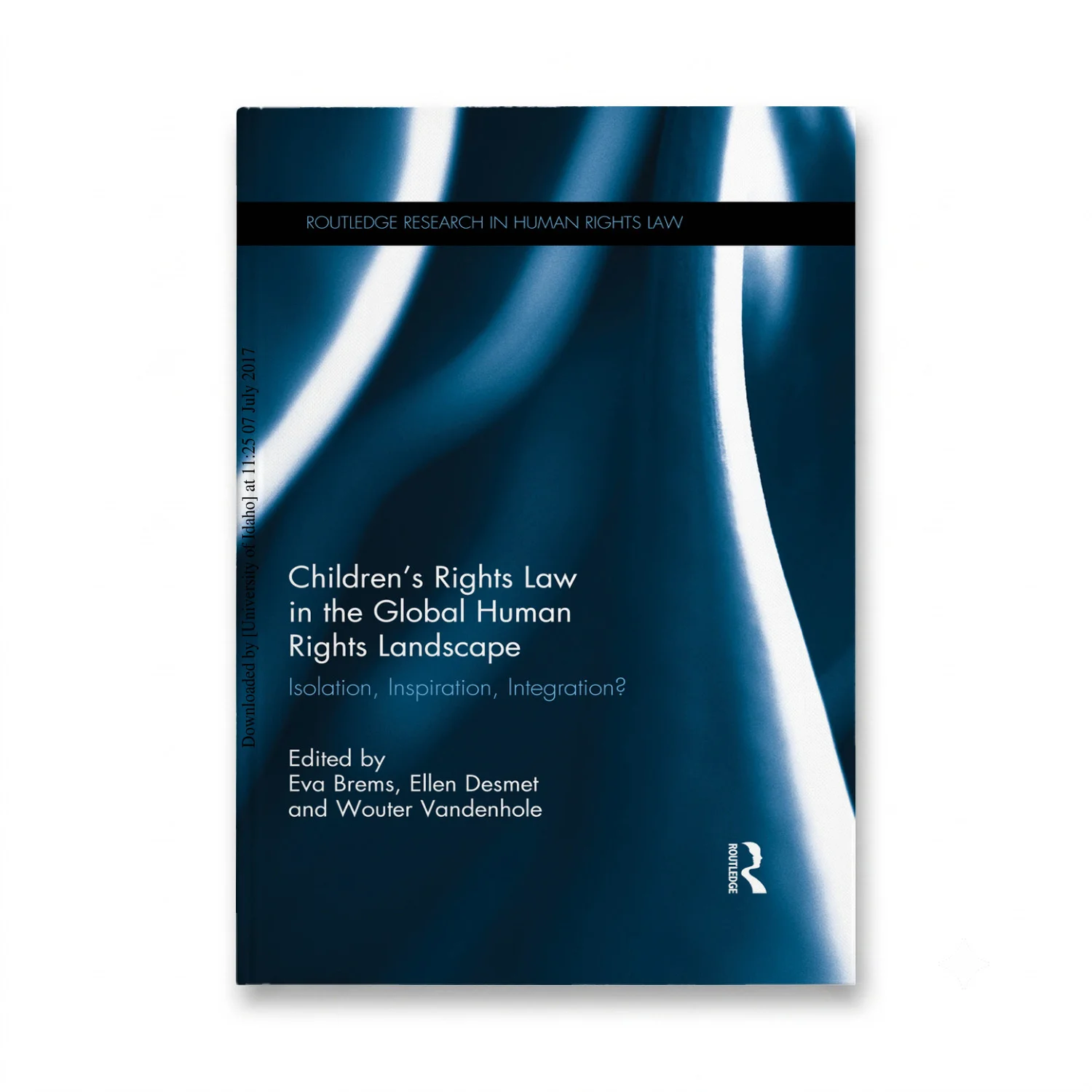

Children’s Rights Law in the Global Human Rights Landscape: Isolation, inspiration, integration? delves into the complex interplay between children’s rights law and general human rights law. Edited by Eva Brems, this comprehensive volume challenges the notion that these two areas of law are often studied in isolation from one another. The book argues for a more integrated approach, exploring how elements from each can inform the other.
The first part of the book examines whether the distinctive characteristics of children’s rights law—such as the emphasis on the ‘best interests of the child,’ the use of general principles, and the inclusion of ‘third parties’ like parents and caregivers—could inspire broader human rights law. This section invites readers to consider how these unique aspects might enrich our understanding of more generalized human rights frameworks.
The second part takes a reverse approach, questioning whether children’s rights law can benefit from developments in other branches of human rights law that focus on specific categories such as women, persons with disabilities, indigenous peoples, or older persons. Here, the volume explores potential synergies and how different areas of human rights might inform children’s rights.
The final part of the book investigates the interaction between children’s rights law and general human rights law in various thematic contexts: intra-family relations, LGBTQI marginalization, migration, media, the environment, and transnational human rights obligations. This section provides a detailed examination of how these issues intersect, highlighting both the challenges and opportunities for integration.
With 326 pages of insightful analysis, this book is essential reading for scholars, practitioners, and policymakers engaged in the fields of children’s rights, human rights, and international law. It offers a nuanced perspective on the potential for greater cohesion between these critical areas of legal study.