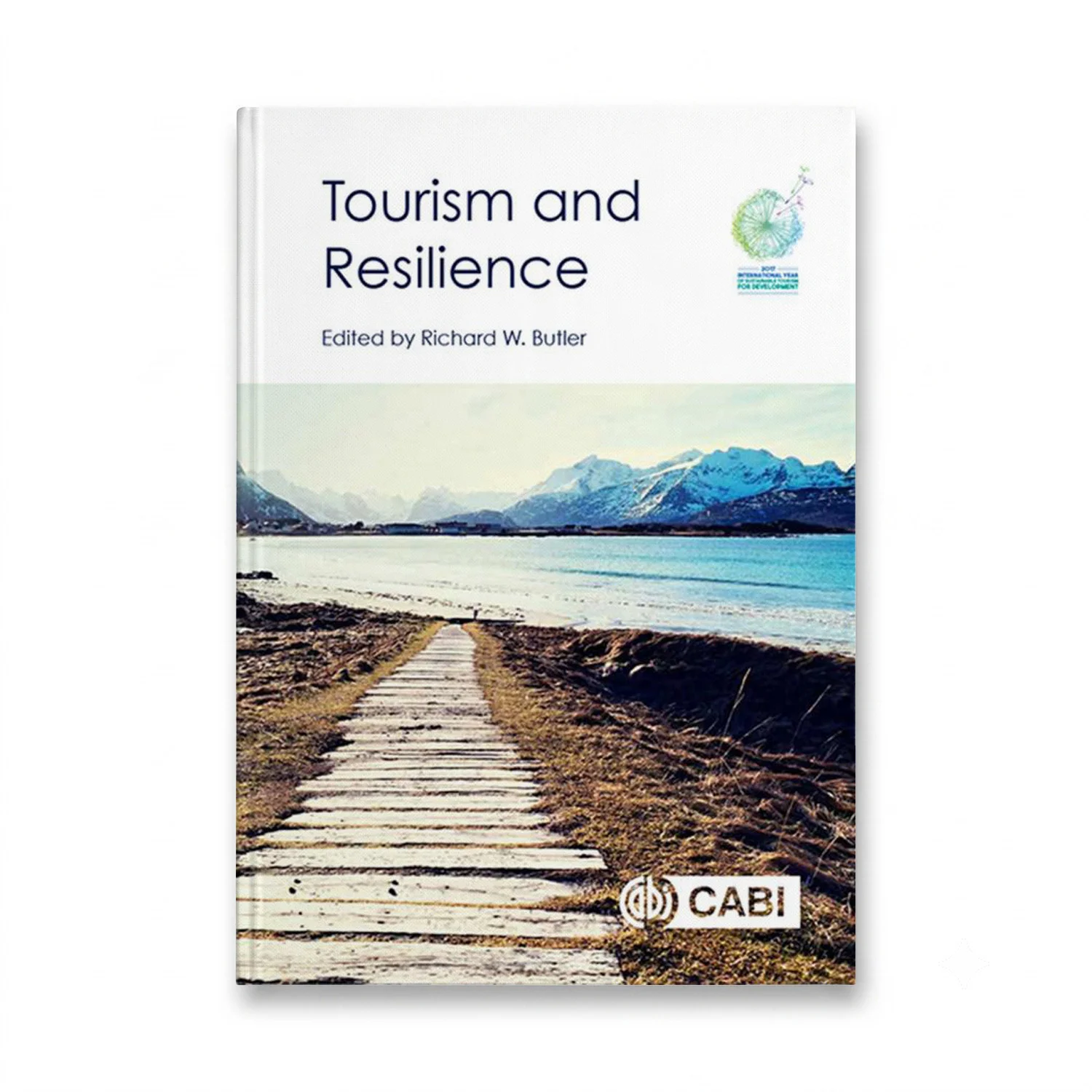
This groundbreaking work is the first to explore the concept of resilience in the context of tourism, focusing on how it can be applied and understood within specific destinations. Resilience, defined here as the ability of organisms, communities, ecosystems, and populations to withstand external forces while maintaining their integrity and functionality, is examined through its relevance to the often-volatile environment of tourism development and visitor impacts. The book highlights both the challenges posed by tourism’s potential harms and the opportunities it presents for enhanced resilience. Destinations, wildlife, and ecosystems are among the key subjects analyzed, alongside the role of tourism infrastructure in disaster recovery from events such as tsunamis, earthquakes, social unrest, and disease outbreaks. Aimed at researchers, students, and professionals in tourism and related disciplines like development studies, geography, sociology, anthropology, economics, and business management, this comprehensive resource offers valuable insights into building more robust and sustainable tourism practices.

Get it before class starts
Semester is close – start reading tonight.
Right edition guaranteed
Wrong edition or ISBN? Free swap.
Help any day, any hour
File will not open? We fix it or refund you.
Buy once, keep it
No subscription, no app, no expiry date.
