
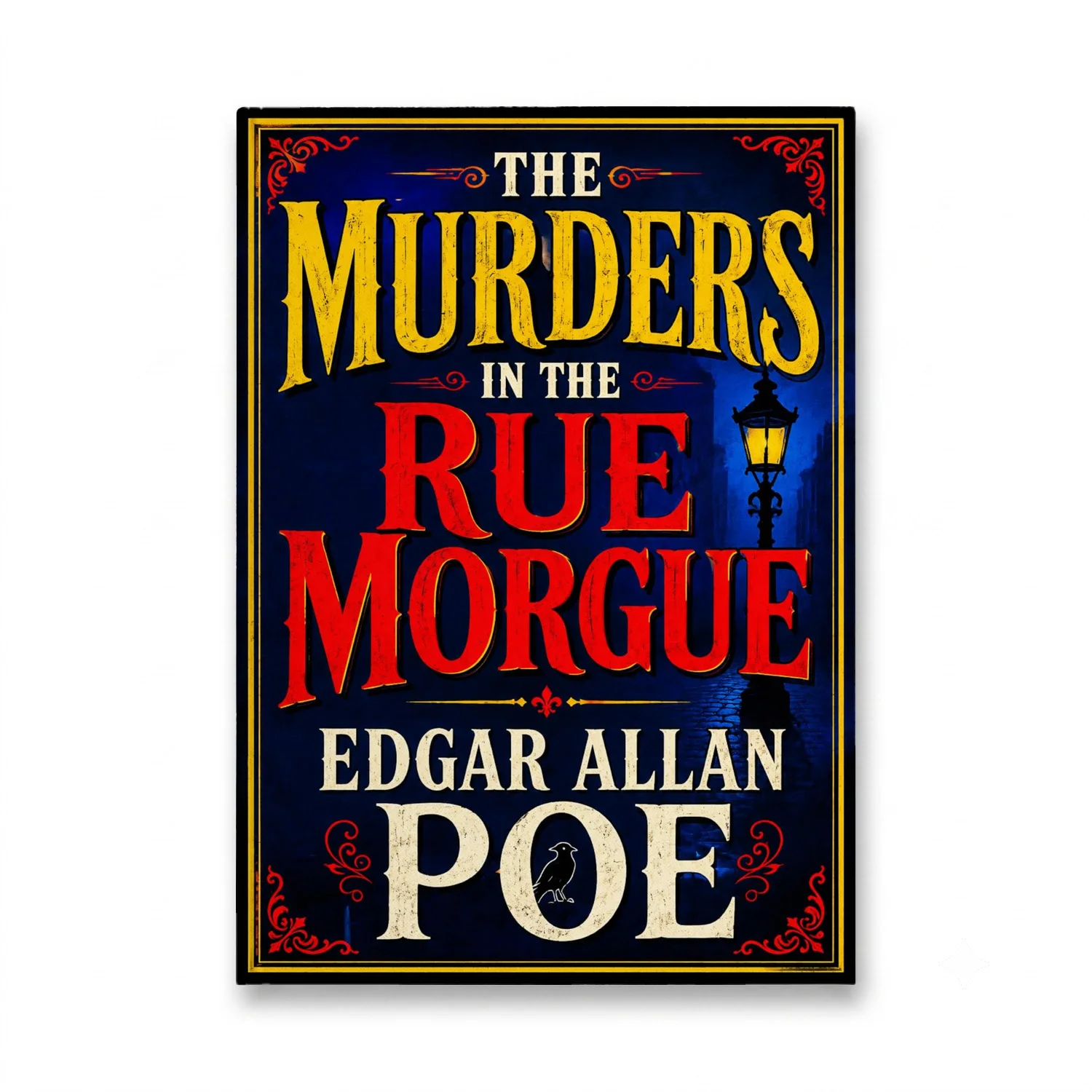

The Murders in the Rue Morgue is a short story by Edgar Allan Poe, first published in Graham’s Magazine in 1841. It has been credited as one of the earliest examples of the detective story genre. The narrative revolves around C. Auguste Dupin, a brilliant and enigmatic man living in Paris who solves a perplexing case involving the brutal murder of two women. Despite numerous witnesses providing conflicting accounts, Dupin uncovers critical clues, including an unusual hair at the crime scene, leading him to unravel the mystery.
Dupin’s investigative techniques laid the groundwork for future literary detectives, influencing characters such as Sherlock Holmes and Hercule Poirot. The story is notable for its use of ratiocination—rational deduction—and sets a precedent for the structure and style of detective fiction. Additionally, Poe introduces elements that would become staples in the genre, including a personal friend who serves as narrator and the revelation of the solution before the reasoning behind it.
“The Murders in the Rue Morgue” is 38 pages long and features the first appearance of the iconic Dupin character, with subsequent stories following his adventures. This groundbreaking work not only marks Poe’s contribution to detective fiction but also establishes a literary tradition that continues to captivate readers today.