
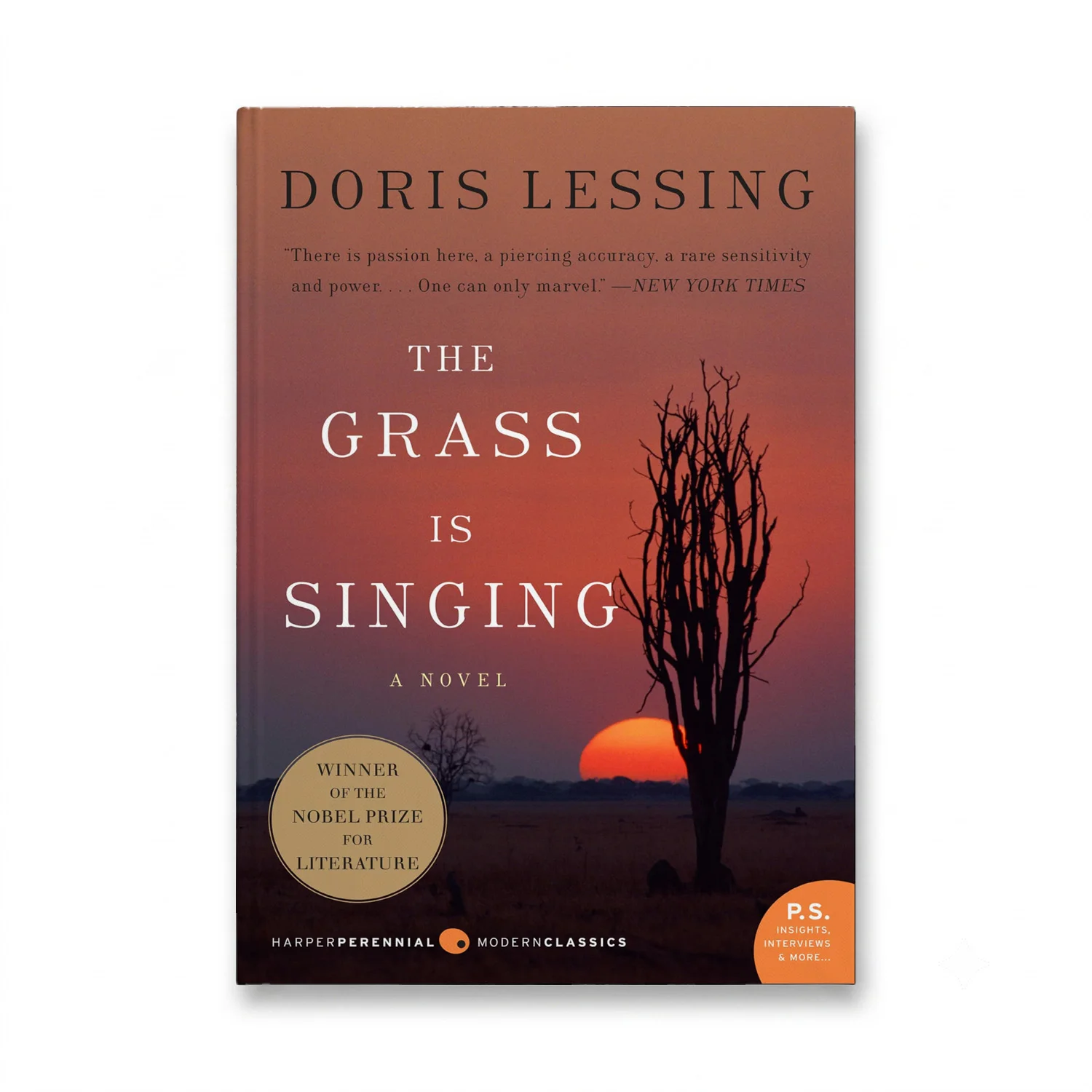

The Grass Is Singing, authored by Doris Lessing and published by Flamingo in March 2000, delves into the intricacies of human emotion and societal constraints set against the backdrop of colonial South Africa. The narrative follows Mary Turner, an initially self-assured young woman who marries an ineffective farmer. Over time, the monotony of their rural life erodes her confidence, leading to a deepening sense of despair. Her situation is further complicated by the arrival of Moses, a powerful and enigmatic black servant whose presence ignites both passion and resistance within Mary. The relationship between master and slave intensifies into a tense dance of attraction and repulsion, culminating in a charged moment that defines their tragic story.
Blending Lessing’s personal recollections with her literary prowess, the novel explores themes of racial tension, gender inequality, and individual struggle against oppressive societal norms. Through Mary’s journey, The Grass Is Singing offers a poignant commentary on colonial life in South Africa, capturing both the inner turmoil of its characters and the external pressures that shape their destinies.
This 208-page novel is a compelling read, offering readers insight into the complex dynamics of human relationships under the weight of historical context. Lessing’s vivid storytelling and keen observations make The Grass Is Singing a significant work in literature, highlighting the quiet horrors of colonial life and the strength found within despair.