
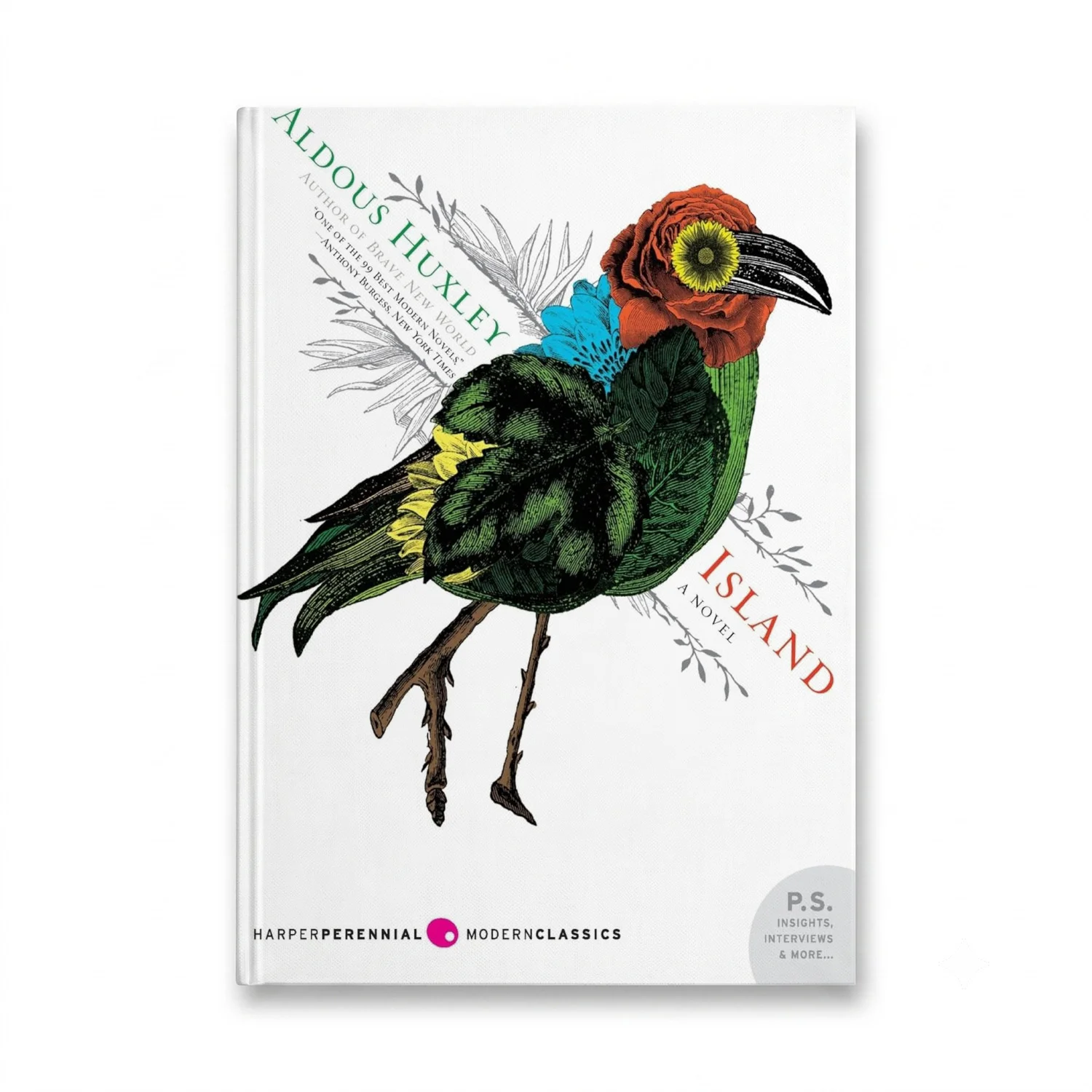

Island (Harper Perennial Olive Editions) by Aldous Huxley presents a provocative utopian vision in this final novel from the author who brought us Brave New World. Set on a remote Pacific island called Pala, which has thrived under an ideal society for 120 years, Island explores themes of human nature, spirituality, and societal harmony. Huxley’s narrative unfolds when a newspaperman named Faranby is shipwrecked there, leading to a transformative journey that challenges his previously held beliefs and offers him profound hope. This novel stands as both a counterpoint to Huxley’s dystopian masterpiece and a timeless exploration of the possibility for a better society.
First published in 1962, Island is described by the New York Times Book Review as “Huxley’s final word about the human condition and the possibility of the good society.” Spanning 384 pages, it invites readers to engage with a world that Huxley considered his most important work. Pala’s unique approach to governance, education, and spirituality sets it apart from the outside world, making it an intriguing study in utopianism.