
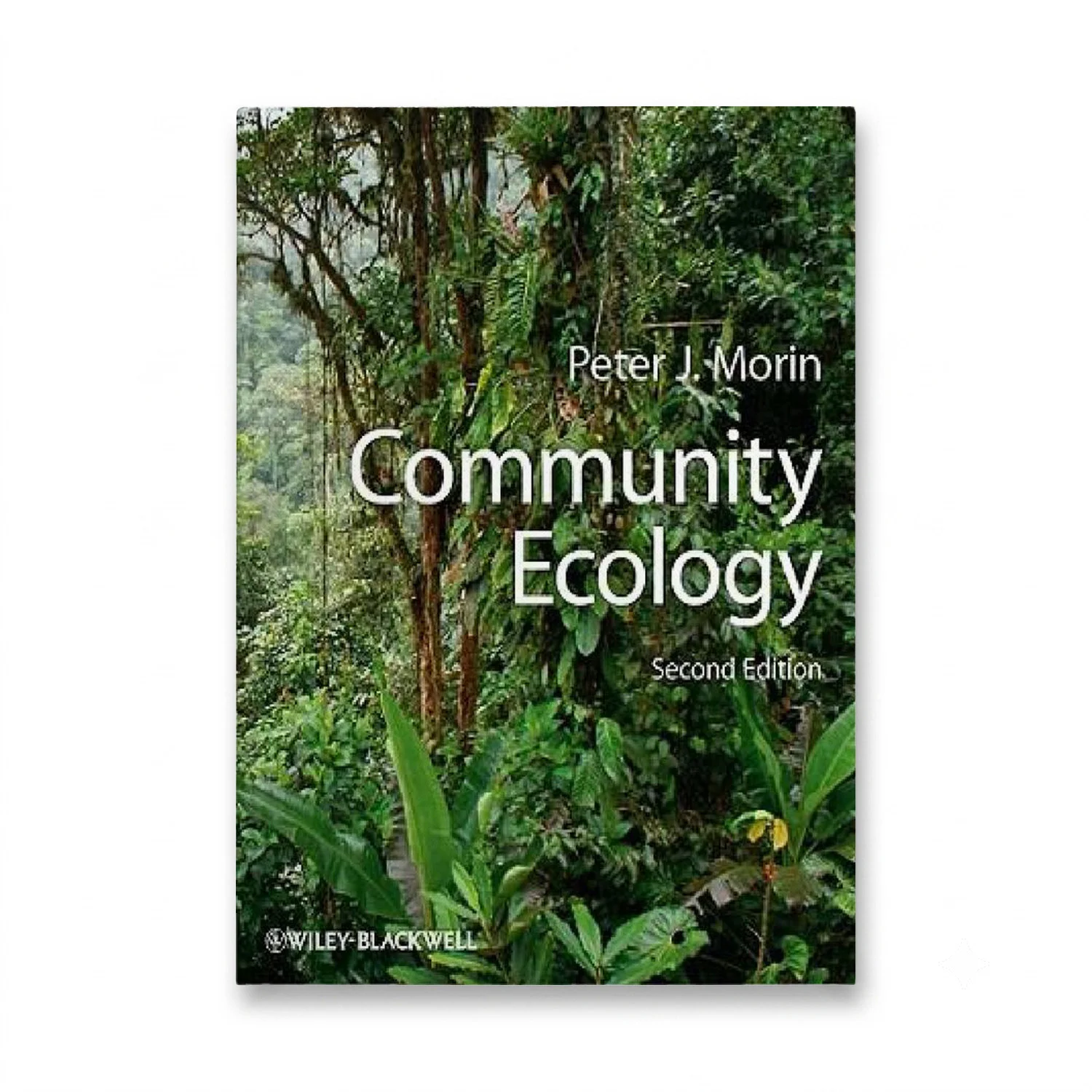

Community Ecology explores the intricate patterns and processes within assemblages of two or more species, focusing on both natural history observations and experimental approaches. This second edition, updated from its original publication in 2011, delves into key concepts like competition, predation, mutualism, indirect effects, and habitat selection, which shape some of the world’s most complex ecosystems including rain forests and coral reefs.
Featuring a diverse array of examples from terrestrial, freshwater, and marine environments, this comprehensive guide introduces readers to the fundamental theories and methods in community ecology. It highlights classic studies that have shaped our understanding of these systems while also examining recent advancements that are driving future research directions. The text emphasizes the importance of integrating observational data, experimental results, and mathematical modeling for a holistic view of community organization.
Originally developed from a course taught by Peter J. Morin since 1983, this book serves as an essential resource for advanced undergraduates, graduate students, and established scientists seeking a broad overview of the field. With 424 pages dedicated to exploring the complexities of community ecology, it is a valuable addition to any ecologist’s library.
ISBN-10: 1444338218
ISBN-13: 978-1444338218
Publisher: Wiley-Blackwell | Publication Date: August 22, 2011 | Dimensions: 7.6 x 1 x 9.7 inches | Print Length: 424 pages