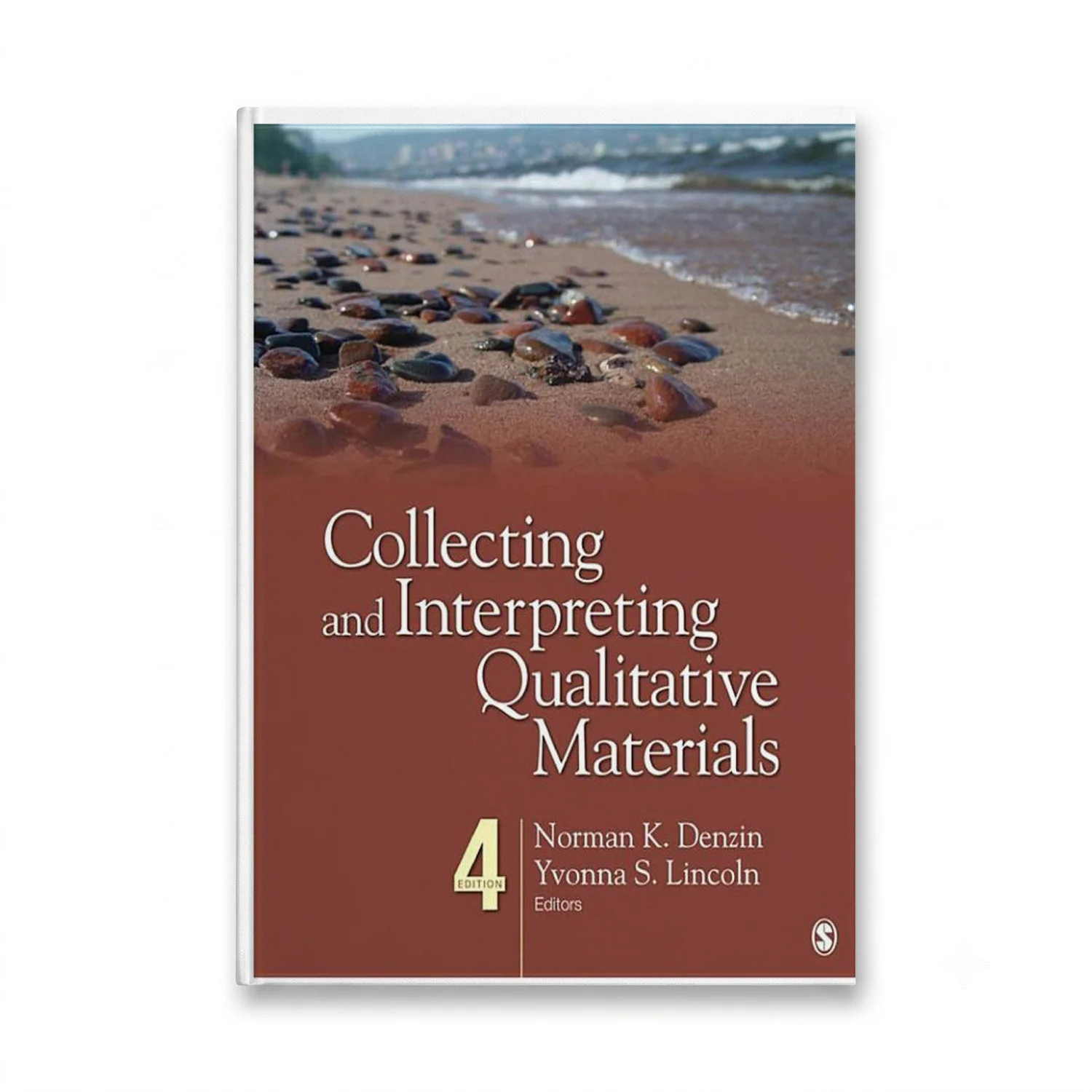
This portion of the handbook delves into the essential tasks of collecting, analyzing, and interpreting empirical materials. It comprises the complete handbook’s “Part IV: Methods of Collecting and Analyzing Empirical Materials” and “Part V: The Art and Practices of Interpretation, Evaluation, and Presentation.” The book introduces researchers to fundamental methods for gathering, analyzing, and interpreting qualitative data. Part 1 explores narrative inquiry, critical arts-based inquiry, oral history, observations, visual methodologies, and autoethnographic methods. It then delves into analysis techniques such as computer-assisted methodologies, focus groups, and strategies for analyzing talk and text. Part 2 discusses evidence, interpretive adequacy, forms of representation, post-qualitative inquiry, the new information technologies and research, the politics of evidence, writing, and evaluation practices.

Get it before class starts
Semester is close – start reading tonight.
Right edition guaranteed
Wrong edition or ISBN? Free swap.
Help any day, any hour
File will not open? We fix it or refund you.
Buy once, keep it
No subscription, no app, no expiry date.
