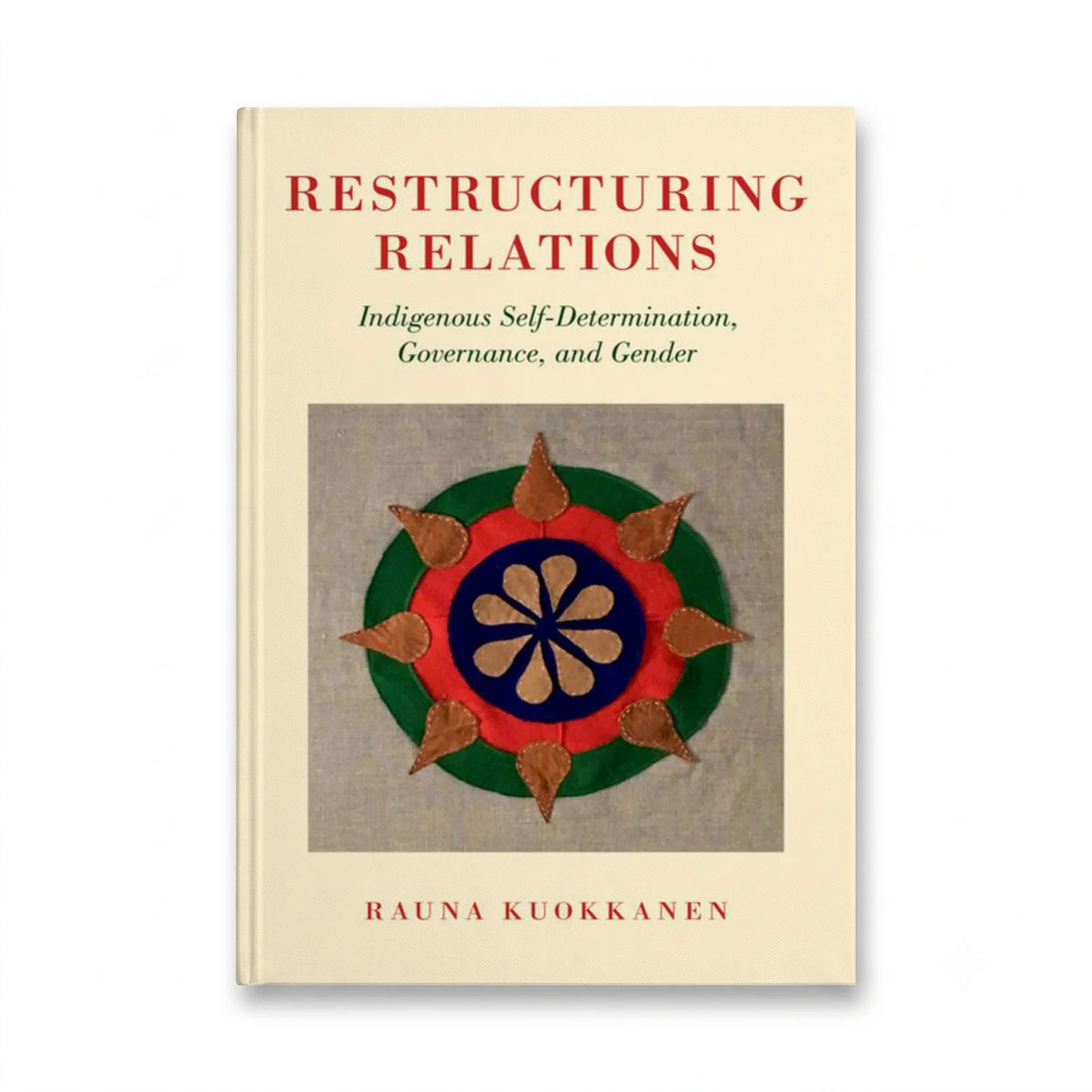
Adopted in 2007, the UN Declaration on the Rights of Indigenous Peoples establishes self-determination— including free, prior, and informed consent—as a foundational right and principle. This book argues that these concepts are crucial for Indigenous women worldwide but highlights how their interests have often been overlooked in discussions of Indigenous self-government. The author, Rauna Kuokkanen, draws on Indigenous and feminist political and legal theory, as well as extensive participant interviews in Canada, Greenland, and Scandinavia, to explore the limitations of current literature on Indigenous governance. She proposes that self-determination should be understood not only in terms of relations with the state but also as a value informed by the norm of integrity. Kuokkanen contends that achieving true self-determination requires restructuring all relations of domination and ensuring gender justice. The book challenges the binary thinking imposed by international law, Indigenous political discourse, and institutions, which creates an opposition between “self-determination” and “gender.” It also delves into the examination of gender regimes in existing Indigenous self-government structures, the relationship between Indigenous self-determination and gender violence, and the future visions of Indigenous governance, such as rematriation and independent statehood.

Get it before class starts
Semester is close – start reading tonight.
Right edition guaranteed
Wrong edition or ISBN? Free swap.
Help any day, any hour
File will not open? We fix it or refund you.
Buy once, keep it
No subscription, no app, no expiry date.
