
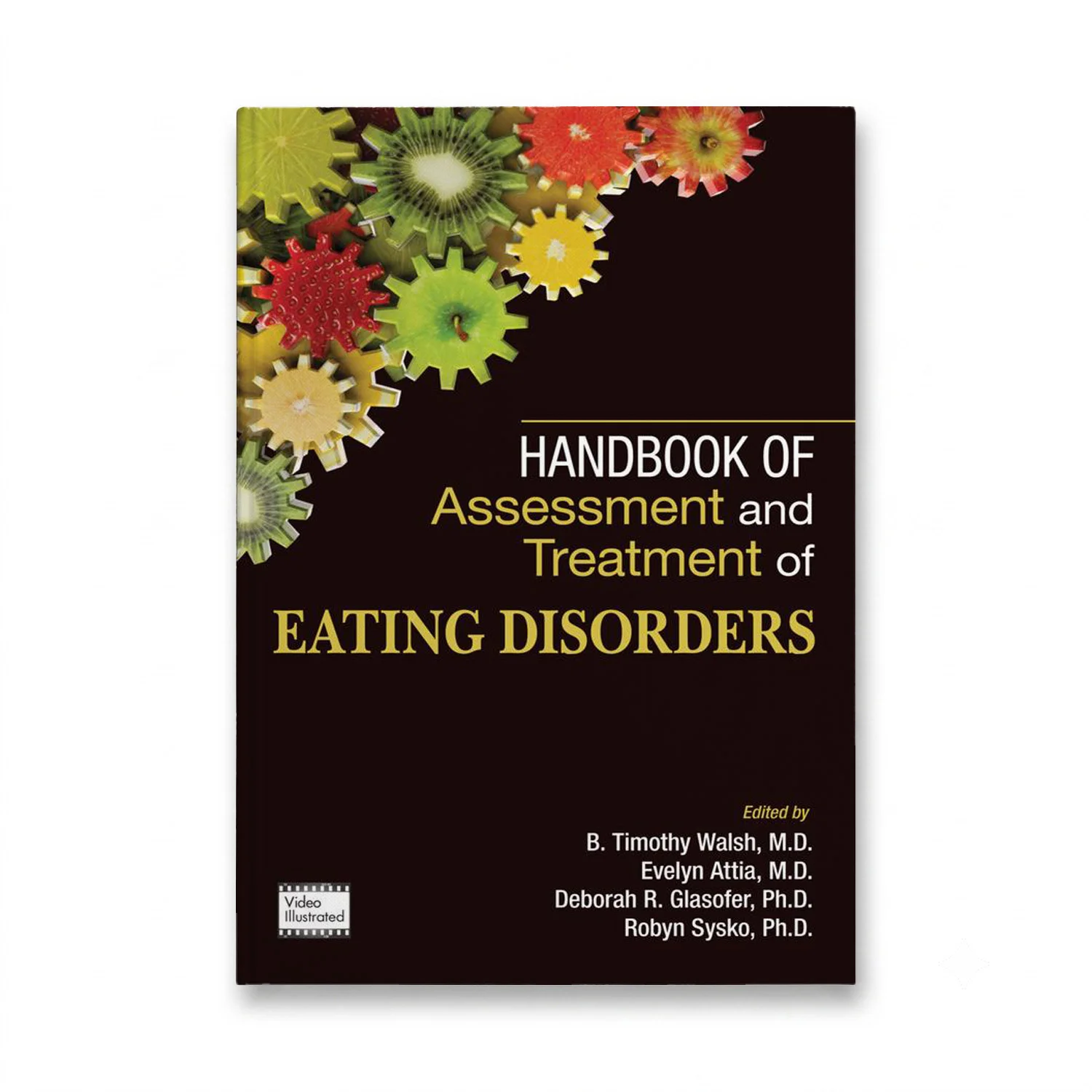

The Handbook of Assessment and Treatment of Eating Disorders, edited by B. Timothy Walsh, is an indispensable resource for clinicians engaged in the assessment and treatment of eating disorders. Published in October 2015, this comprehensive guide reflects the significant changes introduced by the DSM-5, making it a crucial update to current practices.
Beginning with an insightful overview that systematically reviews the transition from DSM-IV to DSM-5, the book delves into the complex nature of feeding and eating disorders. Renowned experts in their respective fields contribute chapters on adults, children and adolescents, as well as special populations, ensuring a broad and inclusive approach.
Comprehensive coverage is provided through dedicated sections on assessment and treatment, complemented by accompanying videos that offer practical insights. Key features include:
- Five full chapters devoted to assessment tools, tracing the evolution from early measures to modern technological applications, with particular emphasis on diagnosing feeding and eating disorders in children and adolescents.
- Detailed exploration of treatment methods for restrictive eating (including anorexia nervosa and avoidant/restrictive food intake disorder), binge eating (bulimia nervosa and binge-eating disorder), and other eating problems such as pica, rumination disorder, and night eating syndrome.
- A focused chapter on eating disorders among men and boys, highlighting their diverse presentations and distinct motivations and body image concerns compared to females.
- An in-depth chapter dedicated to clinical effectiveness in multicultural and cross-cultural settings, underscoring the importance of attunement to culturally and socially patterned characteristics for accurate assessment.
- Each chapter concludes with key clinical points designed to help readers focus on essential content, test comprehension, and prepare for examinations.
This Handbook of Assessment and Treatment of Eating Disorders is an invaluable resource for both seasoned clinicians in practice and mental health trainees. Its up-to-date, DSM-5-compatible content makes it a must-have for the library of every mental health professional today.