
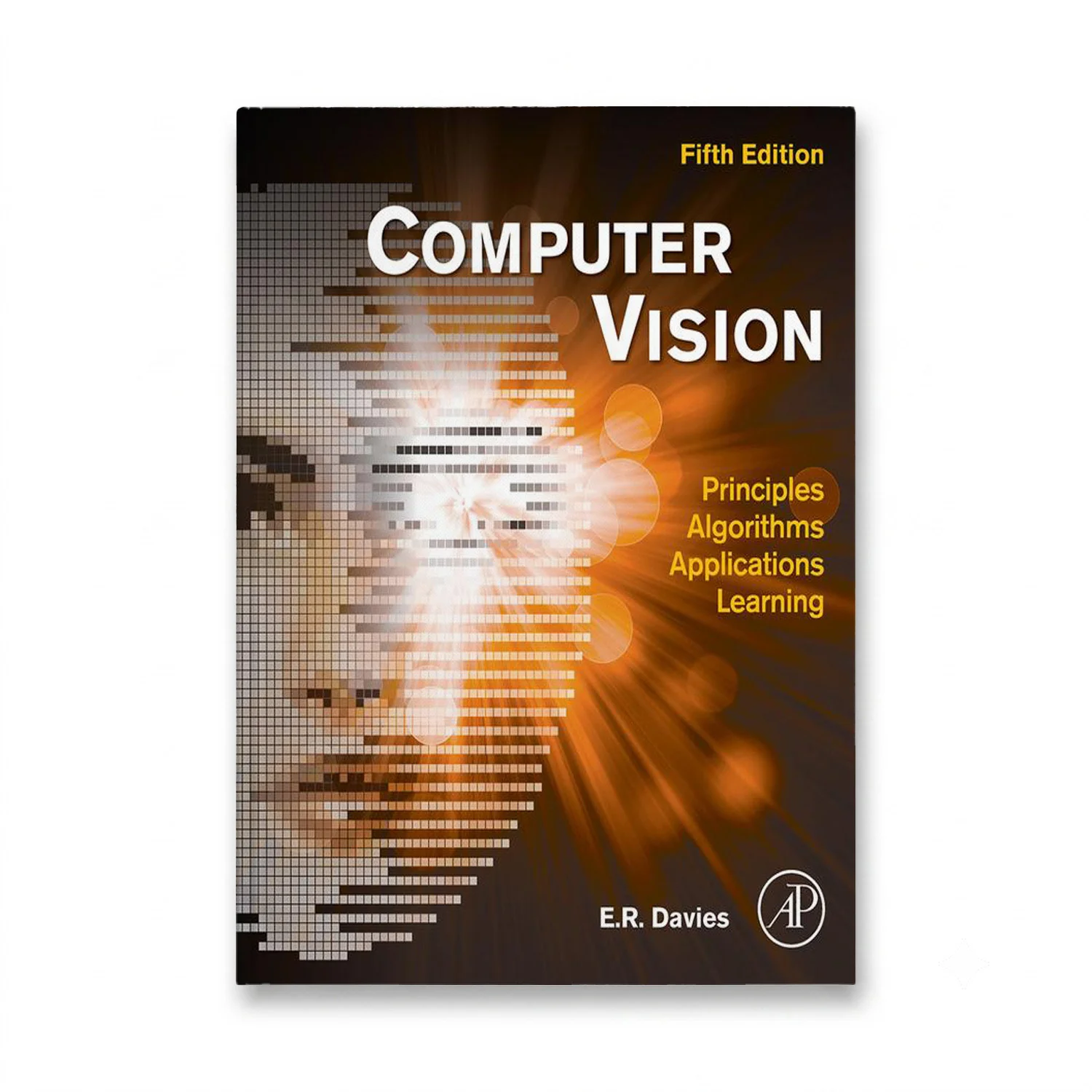

Computer Vision: Principles, Algorithms, Applications, Learning
Author: E. R. Davies
Edition: 5th
Language: English
Publisher: Academic Press
Publication Date: November 15, 2017
ISBN-13: 978-0128095751
This fully revised fifth edition of Computer Vision: Principles, Algorithms, Applications, Learning (previously entitled Computer and Machine Vision) provides a clear and systematic presentation of the fundamental methodology in computer vision. It covers essential elements of theory while emphasizing practical design constraints and algorithmic considerations. The book is designed for both undergraduate and graduate students as well as researchers and R&D engineers working in this vibrant field.
The updated fifth edition includes three new chapters on Machine Learning, which highlight recent developments in the subject. Two chapters delve into Basic Classification Concepts and Probabilistic Models, while a third chapter introduces Deep Learning Networks and their impact on computer vision through a dedicated chapter on Face Detection and Recognition.
A new chapter on Object Segmentation and Shape Models reflects the application of machine learning methodologies and provides practical demonstrations of its implementation. In-depth discussions cover topics such as geometric transformations, the EM algorithm, boosting, semantic segmentation, face frontalisation, RNNs, and more.
The book features examples and applications that illustrate the ‘ins and outs’ of developing real-world vision systems, including scenarios like locating biscuits, detecting foreign bodies, recognizing faces and eyes, identifying road lanes, enhancing surveillance, analyzing vehicles and pedestrians. These practical insights help readers understand the realities of implementing these technologies in the field.
Necessary mathematics and essential theory are made accessible through careful explanations and well-illustrated examples. Each chapter includes a ‘recent developments’ section to keep students and practitioners current with the rapidly evolving field of computer vision.
Tailored programming examples, including code, methods, illustrations, tasks, hints, and solutions (mainly involving MATLAB and C++) are provided to support learning and practical application.