
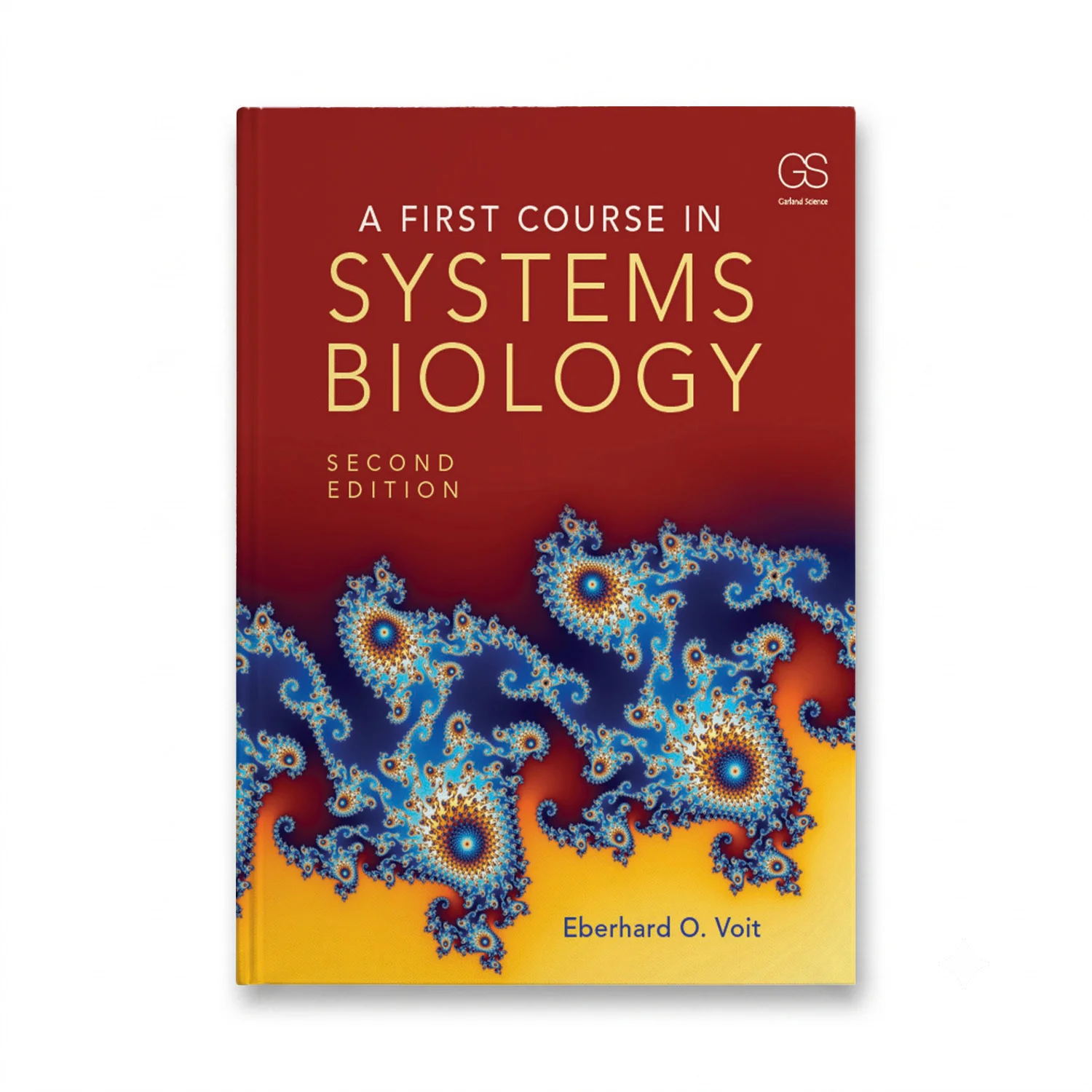

A First Course in Systems Biology, 2nd Edition, authored by the acclaimed Eberhard O. Voit, offers an essential introduction for advanced undergraduate and graduate students to the expanding field of systems biology. Published by Garland Science on September 5, 2017, this comprehensive work, identifiable by ISBN-10: 815345682 and ISBN-13: 978-0815345688, primarily focuses on the development of computational models and their diverse applications across various biological systems.
The book systematically guides readers through the fundamentals of modeling, then delves into features of the molecular inventories that animate biological systems. It further explores compelling case studies representing the cutting edge of systems biology and synthetic biology. Through this structured approach, readers gain a robust background, access to methods for executing standard systems biology tasks, and the ability to comprehend modern literature, thereby preparing them for specialized courses or projects involving theoretical and computational approaches to biological questions.
This 2nd Edition introduces a wealth of new topics, including default modules for model design, limit cycles and chaos, parameter estimation in Excel, and model representations of gene regulation through transcription factors. Further enhancements include the derivation of the Michaelis-Menten rate law from its original conceptual model, discussions on different types of inhibition, hysteresis, a model of differentiation, and system adaptation to persistent signals. Readers will also explore nonlinear nullclines, PBPK models, and elementary modes.
Designed for effective learning, the book combines clear instructional text with references to primary literature. It is richly complemented by sets of small-scale exercises that provide hands-on experience, alongside large-scale, often open-ended questions designed for deeper reflection and critical thinking.