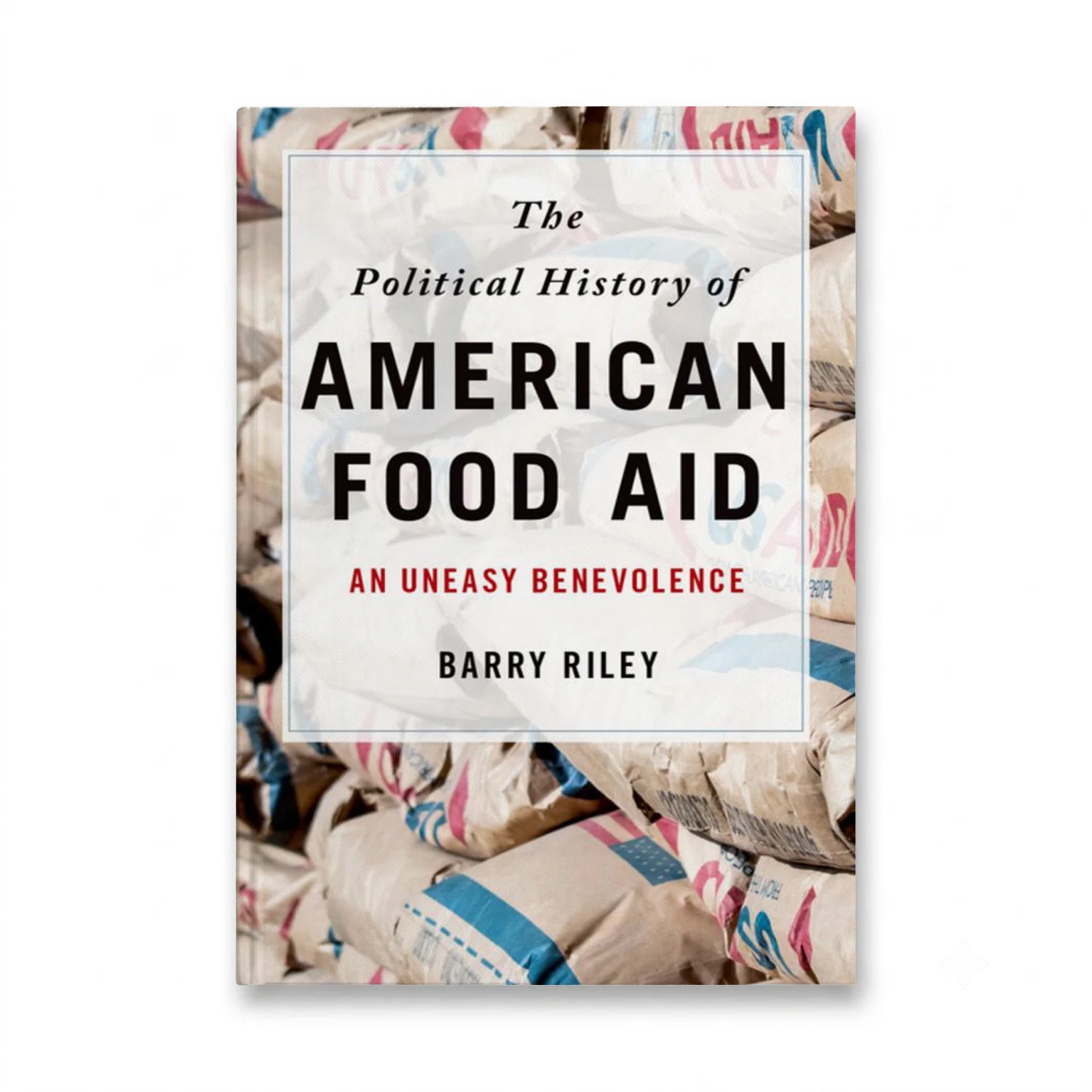
The Political History of American Food Aid: An Uneasy Benevolence explores the intricate political processes that have transformed American agricultural production into tools of U.S. government policy. Author Barry Riley delves into the influences of humanitarian instincts, domestic agricultural policy, foreign policy goals, and national security interests on America’s food aid initiatives. Spanning from the early days of the republic to contemporary times, this comprehensive study examines how food aid has been employed in diverse contexts: as a response to famine, a strategic weapon against ideological threats, a diplomatic tool for resolving regional disputes, a means to address agricultural surpluses, and a method for garnering political support. Through meticulous research and analysis, Riley provides profound insights into the complex factors shaping American food aid policy and its historical relationship with relief efforts, economic development, and food security. The book lays a foundation for understanding the potential future of this vital humanitarian effort in an era grappling with global climate change.

Get it before class starts
Semester is close – start reading tonight.
Right edition guaranteed
Wrong edition or ISBN? Free swap.
Help any day, any hour
File will not open? We fix it or refund you.
Buy once, keep it
No subscription, no app, no expiry date.
